Most people consider marketing to be something that has to be paid for, and if you run an ad, you will get the customer. This is something that people do regularly when they believe they do not have enough clients in a given month, but it is no longer effective.
Now, after doing this type of thing on repeat and when it stops working, people ask, Why do my competitors keep showing up everywhere while I am still struggling to even be seen? And the answer is you are going for temporary things, and they figured out what content marketing is.
This blog is not a textbook answer. This is what I’ve seen work and not work from years of building brands, agencies, and content for businesses across very different industries.
Content Marketing in Simple Words
Content marketing is the process of using copywriting or creative talents to inform the audience about what you do till you locate the proper people.
That is the whole thing.
It is not ads. It is not selling. It is not posting random stuff on Instagram, hoping something works.
Now, for example, imagine a local makeup artist coach.
- Option one: She runs ads every week asking people to go for her makeup service.
- Option two: She posts short videos of her work and gives some tips for free, too.
What do you think? A few months later, when they want to get their makeup done, whose name comes to mind first?
That is content marketing. The second woman didn’t pursue anyone, and she simply remained beneficial long enough that people came to her on their own.
Traditional Marketing vs Content Marketing at a Glance
| Traditional Marketing | Content Marketing |
| Pushes the product to the customer | Pulls the customer toward the brand |
| Works only while you are paying | Keeps working even after you stop |
| Interrupts what people are doing | Adds value to what people are doing |
| Quick spike, fast drop | Slow start, long-term compounding |
| Focused on selling | Focused on helping |
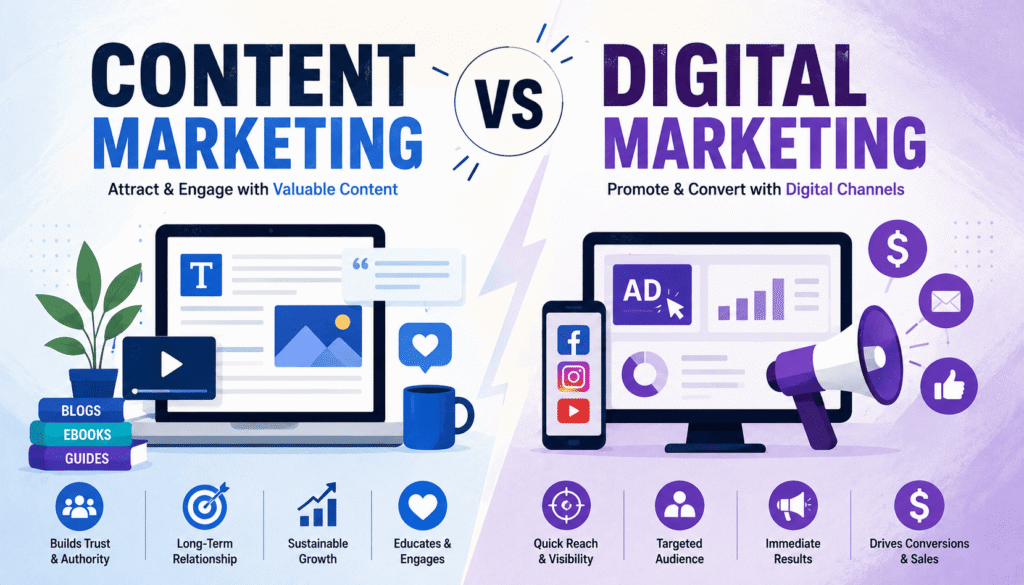
Content Marketing vs Digital Marketing
Digital marketing is the umbrella. It includes ads, SEO, social media, email, influencer work, and yes, content marketing too. One particular strategy is content marketing, which focuses on producing worthwhile information that draws in and retains readers without making direct sales.
Digital marketing is the entire restaurant. Content marketing is the chef who quietly makes the food so good that people keep coming back without you ever having to convince them.
You can do digital marketing without good content, but it will be expensive and inconsistent. You can do content marketing as part of digital marketing, and your other channels start working better automatically.
The Role of Content in Digital Marketing
Every single digital marketing channel runs on content:
- Your SEO needs content to rank.
- Your social media needs content to post.
- Your email marketing needs content to send.
- Your ads need content to convert.
- Your website needs content to explain anything at all.
Without content, your entire digital marketing has nothing to say. You are basically paying to send people to a page that does not communicate clearly. That is why so many businesses burn through ad budgets and complain that nothing works. The ads are fine. The content waiting for them is the problem.
Everything else is more affordable and efficient when the content is strong. Everything else becomes costly and annoying when the content is poor.
What It Actually Does for Your Business
Now this is exactly where people start losing interest in the article, because here people only start mentioning the benefits, but I’ll give you the four that are really important.
If you present yourself as someone useful and then someone searches for something related to what you offer, your content has a chance to show up. The more useful content you have out there, the more often you become the answer.
It serves as a conduit for developing trust between you and a potential client. We all do some sneak peek before making our final decision, and the same with the potential clients. You just have to make sure that when they get in touch with you, they already have good information about you. Content does that work for you while you sleep.
When you do cold outreach, it’s like attention seeking, but just exciting and putting good content out there makes you valuable.
This is the part that takes faith. An article you write today can still be bringing in leads three years from now. Content keeps working long after the work is done.
According to the recent records, content marketing is time-consuming and more beneficial than any other method to get more leads at affordable prices. That gap only grows over time because content compounds and ads do not.
B2B Companies Benefit from Content Marketing
B2B is like the place made for content marketing only, because here it shines the most.
A B2C customer may purchase a product in five minutes, whereas a B2B buyer may wait weeks or months and speak with an entire team before making a decision. During that long decision period, content is what keeps your brand in the conversation.
Recent research shows that around 70 to 90 percent of B2B buyers complete their research before they even talk to a salesperson. They have read your blogs, seen your videos, downloaded your manuals, and contrasted you with three other possibilities by the time they give you a call. The deal is typically won by the person who taught them the most during that research phase.
B2B companies that disregard content are losing business that they won’t even be aware of. The decision was made in quiet well before any sales conversation had taken place.
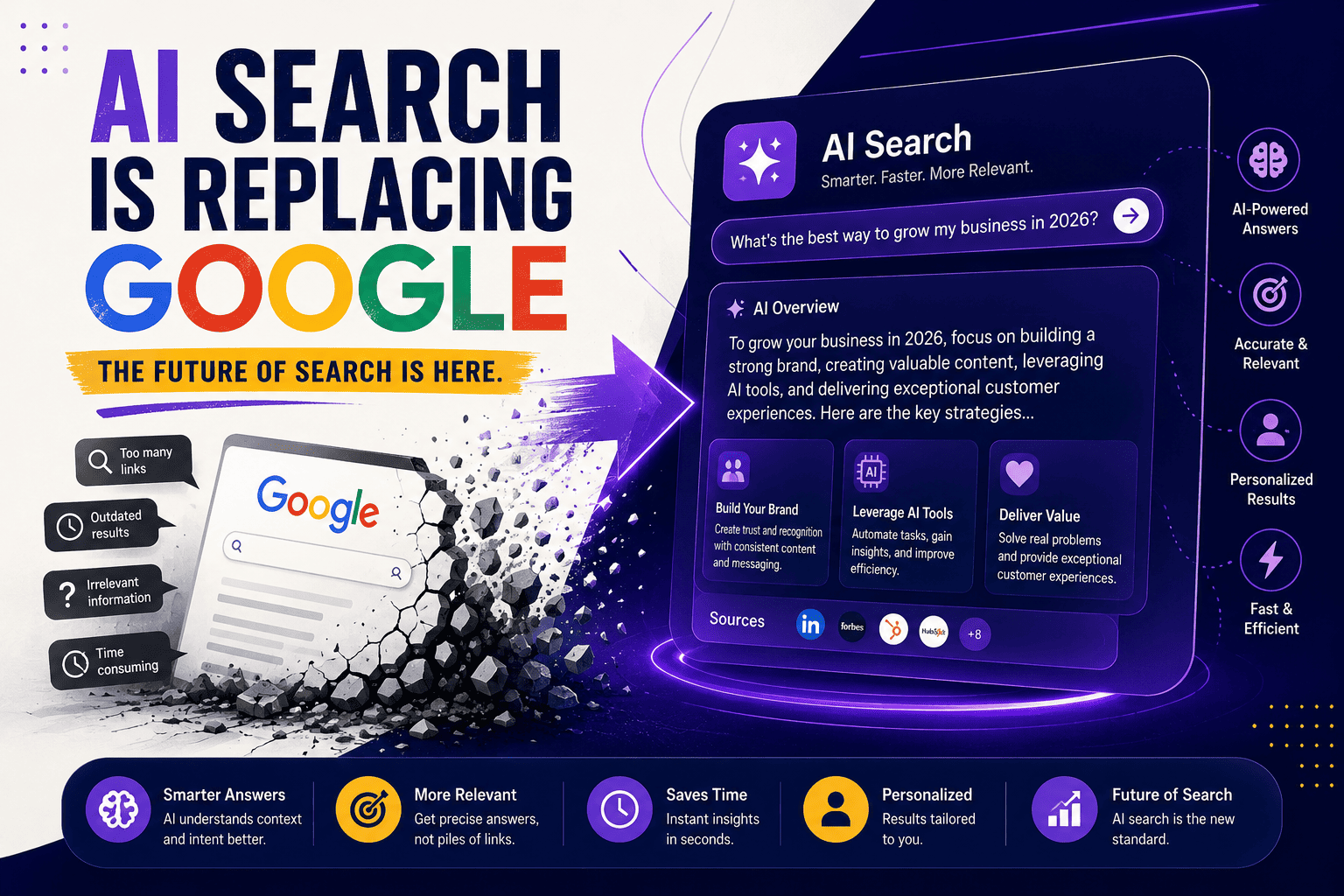
- Read More: How AI Search Is Replacing Google (And What Small Businesses Should Do About It)
- Read More: Best AI Tools for Copywriting to Boost Creativity and Speed in 2026
How Content Shapes the Way People See Your Brand
Your public brand voice is found in your content. Your internet persona gradually shapes people’s perceptions of you.
It is up to you to determine if you want to become the discount brand by always discussing discounts or the expert by sharing insightful information.
Individuals are more invested in the narrative that you tell instead of the various features you give. The company feels that the longer it has been in business, the more it can relate to and appreciate its clients.
At some point, you will become bored if a brand only discusses its product repeatedly, similar to a continuous advertisement.
Having a Strategy Makes All the Difference
Random posting is what most small businesses do. Real content marketing has a strategy behind it.
The difference looks like this.
| Random Content | Strategic Content |
| Post when you feel like it | Post with a clear goal |
| Talk about whatever | Talk about what your audience cares about |
| No tracking | Track what works |
| Random topics | Topics tied to your services |
| Hope it works | Test and improve |
A simple strategy does not have to be complicated. It usually answers these four things.
- Who are you talking to?
- What do they actually struggle with?
- What kind of content will help them?
- Where do they spend time online?
You do not need a 40-page strategy document. You need clarity on those four things and the discipline to stick to them for at least six months before judging the results.
As an actual example, a small accounting company I worked for began publishing one blog post every week in response to frequently asked tax-related inquiries by their clients over the phone. Within eight months, they were getting 40 to 50 percent of their new clients from people who found those blogs while searching for tax help.
The Honest Pros and Cons
I am not going to sell you on content marketing without being honest about the trade-offs.
What it does well
First thing is it costs very little compared to and brings the better leads who are already well aware of your work. It positions you as an expert without you having to claim it.
Where it takes time
In the beginning, it can feel useless, especially in the first three to six months. You need to be consistent even when results are not visible yet. Bad content can hurt more than no content.
Content marketing is not for someone who needs it; it’s just like some other ad they are running. It is for people who want to build something that keeps bringing in customers two and three years from now without paying for every single one.
If you want sustainable growth, do content. The best businesses do both, but they understand which one is doing what.
What Content Marketing Services Actually Include
Plan your strategy and content according to your objectives and target audience, authoring articles or blogs that are search engine and reader-optimized. content on social media related to that approach. Email content if you have a list. SEO optimization on everything that gets published. Monthly reporting on what is working and what is not.
Anyone who is unable to demonstrate how their content relates to actual business goals. Content marketing does not function in that way, and anyone who claims differently is selling something else.
Anyone who only promises you blog posts without a strategy. Anyone who guarantees results in 30 days.
Final Thought
To be clear, content marketing is not a magic act. It is just the gradual, sincere process of building a brand that consumers will trust enough to purchase from when the time is right. The right business has just built something so strong that it is enough to attract people for the long term.
If you are running a business in 2026 and you still do not have a content strategy, this is the moment to start. However, since consumers’ purchasing habits have evolved, the brands that adapt will continue to exist in five years.
Maintaining consistency is crucial, regardless of how little you start. Most people are unaware of the full impact of doing this for a full year. The majority of your rivals have already given up by the time results are expected to appear.
That is usually where the opportunity is.